How to Pitch Brands as a Small Content Creator (Without Sounding Desperate)
Most creators think they’re being ignored by brands because they don’t have enough followers — but that’s usually not the real problem. In this post, I’m breaking down the biggest pitching mistakes small creators make, what brands actually look for, and how to position yourself professionally without sounding robotic or desperate.
When I first started pitching brands, I genuinely thought the reason I wasn’t hearing back was because I didn’t have enough followers.
So I spent way too much time focusing on numbers instead of learning how to actually position myself professionally.
And honestly?
That’s where I see so many smaller creators getting stuck.
They assume:
they need 100K followers
their content isn’t “good enough”
brands only care about viral creators
or that they need to sound overly corporate in emails
But after years of working in this industry, both as a creator and behind the scenes, I’ve learned something important:
Most creators aren’t getting ignored because they’re too small.
They’re getting ignored because their pitch doesn’t clearly communicate their value.
The Biggest Mistake Small Creators Make When Pitching Brands
A lot of creators send emails that sound:
overly apologetic
too vague
too long
or completely focused on themselves instead of the brand
And listen…I get it.
Talking about yourself professionally can feel awkward at first.
Especially when you’re still building confidence in your content.
But brands are not looking for perfection.
They’re looking for creators who:
understand their audience
create trustworthy content
know how to communicate clearly
and feel aligned with the brand
That matters more than follower count way more often than people realize.
You Do NOT Need a Massive Following to Work With Brands
One of the biggest myths online right now is that you need a huge audience before brands will take you seriously.
You don’t.
Some of the most valuable creators are creators with:
engaged communities
niche audiences
high trust
and strong storytelling
That’s especially true in beauty, lifestyle, skincare, motherhood, and niche creator spaces.
Brands care about connection.
Not just numbers.
I’ve personally seen smaller creators land opportunities simply because they knew how to present themselves professionally and genuinely.
What Brands Actually Want From Creators
Most brands are looking for creators who can:
make content feel natural
create trust with their audience
educate or influence purchasing decisions
communicate professionally
and deliver content consistently
That’s why your pitch matters so much.
Your email is often the first impression a brand gets of you.
And if your pitch sounds rushed, unclear, or unsure of itself…brands can feel that immediately.
Stop Trying to Sound “Perfect”
One of the biggest things I had to learn was that pitching is not about sounding robotic or overly polished.
It’s about sounding:
confident
clear
professional
and aligned
You don’t need to write a novel.
You don’t need to oversell yourself.
And you definitely do not need to beg brands for opportunities.
You need to clearly communicate:
who you are
who your audience is
what kind of content you create
and why you would be a good fit
That’s it.
Why I Created “The Pitch That Gets You Replies”
After years of learning through trial and error, I realized that smaller creators are constantly being told:
“Just email brands!”
…but nobody actually teaches creators HOW to pitch professionally.
So I created a workbook that walks creators through:
how to structure a pitch
what brands actually pay attention to
how to stop underselling yourself
what to include in outreach emails
and how to position yourself even if you don’t have a massive following
Because smaller creators deserve opportunities too.
And honestly?
Some of the best creators I know are still growing their platforms.
What’s Inside the Workbook
Inside The Pitch That Gets You Replies, I included:
real pitch examples
outreach tips
ways to position your value
mistakes to avoid
guidance for smaller creators
and strategies I’ve personally used throughout my creator journey
This workbook is designed to help creators feel more confident, professional, and prepared when reaching out to brands.
Grab the workbook here:
And if you’re not already on my email list, make sure you join because I’ll be sharing even more creator resources, PR tips, and behind-the-scenes advice for smaller creators.
Final Thoughts
If you’re a smaller creator reading this, I really want you to understand this:
You do not need to wait until you feel “big enough” to start showing up professionally.
You can build relationships with brands now.
You can create opportunities now.
And you absolutely deserve to take your work seriously now.
Because consistency, trust, and community matter more than most people realize.
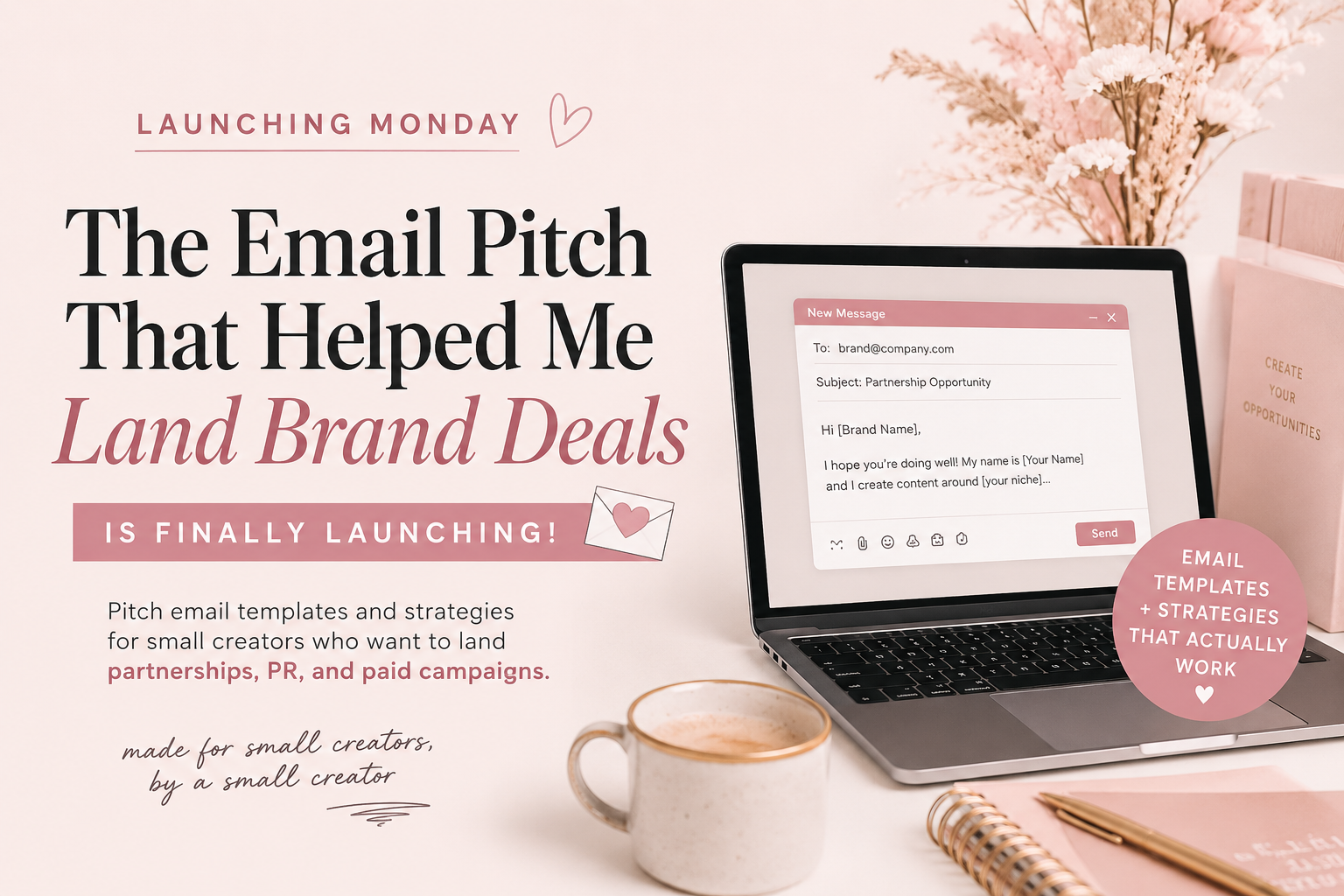
Small Creators Keep Asking Me for My Pitch Emails…So I Made Something
A creator recently asked if they could buy the actual email pitches I use for brand deals…and honestly, I’d never even thought about turning them into a product. But after years of pitching brands as a smaller creator, I realized so many creators aren’t struggling because they lack talent — they just don’t know what to say. So I finally created the resource I wish I had when I started. Launching Monday 💌
A few months ago, a creator asked me something that honestly caught me off guard.
She asked if I would ever sell the actual email pitches I use for brand deals.
At first, I laughed a little because I never thought of my emails as a “product.” They were just the emails I spent years refining through trial and error while building relationships with brands as a smaller creator.
But then I realized something:
A lot of creators don’t struggle because they aren’t talented.
They struggle because they don’t know what to say.
They don’t know how to pitch themselves without sounding robotic.
They don’t know how to follow up professionally.
They don’t know how to make brands actually want to respond.
And honestly?
Most of the advice online about pitching brands feels super generic.
So after getting asked over and over again, I decided to finally put together something I wish I had when I first started.
Launching Monday, I’m releasing my brand pitch email collection for creators.
Not just one template.
Actual emails.
Real frameworks.
Real approaches I use depending on the situation.
Inside, I’ll be sharing:
• Pitch email structures that feel natural (not corporate)
• Follow-up email examples
• Ways to pitch yourself even as a small creator
• Subject line ideas
• How to sound confident without overselling yourself
• The exact mindset shift that helped me stop being scared to pitch brands
Because the truth is:
You do not need a huge following to start building brand relationships.
You need strategy.
You need consistency.
And you need to know how to communicate your value.
That’s what this is about.
If you’ve ever stared at a blank screen trying to figure out how to email a brand…this was made for you.
Launches Monday 💌

How Small Beauty Creators Can Start Receiving PR (Even With Under 10K Followers)
Think you need 10K+ followers to start receiving PR? Think again. This guide breaks down how small beauty creators can attract PR organically through consistency, content, and authentic brand engagement.
One of the biggest misconceptions in the beauty space is that you need a large following to start receiving PR.
You don’t.
In fact, many brands are shifting their focus toward smaller creators with engaged, niche audiences, especially creators who show up consistently and create content that feels real.
If you’re a beauty creator with under 10K followers, this post is for you.
Because the truth is:
PR isn’t about follower count, it’s about how you show up.
Let’s Clear This Up First
I want to be very clear about something:
I don’t pitch brands for PR.
I don’t send emails asking to be added to PR lists.
I don’t DM brands requesting products.
Every PR opportunity I’ve received has come from:
✔️ organically using products
✔️ consistently posting about them
✔️ engaging with brands
✔️ building trust with my audience
That’s it.
And that’s exactly what we’re going to focus on here.
What Brands Actually Look For (It’s Not Your Follower Count)
Brands are paying attention to things like:
1. Consistency
Are you showing up regularly?
Not just posting once and disappearing, but consistently creating content over time.
2. Content Quality
This doesn’t mean perfection.
It means:
clear visuals
good lighting
intentional content
Your content should make someone stop scrolling.
3. Audience Alignment
Does your audience match the brand’s customer?
For example:
If your audience is women 40+, and you’re showing how products work for mature skin, that’s incredibly valuable.
(And this is where you already stand out.)
4. Authenticity
Brands can tell when you actually use a product versus when you’re just mentioning it.
They’re looking for creators who:
use products repeatedly
speak naturally about them
integrate them into real routines
How to Start Getting PR Organically
Here’s exactly what I recommend:
1. Start With Products You Already Own
Look at what’s already in your collection.
Instead of chasing new products, ask yourself:
👉🏽What brands am I already using that I genuinely love?
Then start creating content around those.
2. Post About the Same Brands Consistently
This is where most creators get it wrong.
They post about a brand once…and move on.
But brands notice creators who:
feature their products multiple times
include them in routines
talk about them naturally over time
Consistency builds recognition.
3. Tag Brands (But Don’t Force It)
Whenever you use a product, tag the brand.
Not in a “pick me” way, just naturally.
Example:
in your caption
on the screen
in your tags
This helps your content get seen by their team.
4. Engage With Brands Like a Real Person
This is a big one.
Don’t just post and disappear.
comment on their posts
reply to their stories
engage with their content regularly
Over time, your name starts to feel familiar.
5. Show How Products Work for Your Audience
This is your advantage as a smaller creator.
You’re not trying to speak to everyone, you’re speaking to your people.
For you, that looks like:
mature skin makeup
real routines
honest product feedback
Brands love creators who bring a specific audience perspective.
What NOT to Do
Let’s talk about what slows creators down:
🚫 Only posting when you want PR
🚫 Tagging brands with no real context
🚫 Constantly switching products with no consistency
🚫 Trying to copy what bigger creators are doing
The goal is not to look like everyone else.
The goal is to be recognizable.
Why Small Creators Actually Have an Advantage
This might surprise you, but:
Small creators are often more valuable than large ones.
Why?
Because:
✨ your audience trusts you
✨ your content feels relatable
✨ your recommendations feel genuine
And brands know that.
Final Thoughts
If you take one thing from this post, let it be this:
You don’t need to chase PR.
Focus on:
showing up consistently
using products you love
creating content that serves your audience
And over time, the right brands will start to notice you.
Want to Start Attracting PR Opportunities?
If you’re serious about growing as a beauty creator and getting on brand radars, I created a free guide to help you get started.
✨ Learn how to position yourself as a PR-ready creator
✨ Understand what brands are actually looking for
✨ Start building real relationships with brands